.svg)

.svg)


.webp)

- Choose Deel or Gusto if you need a payroll platform to pay your team, file taxes, and stay compliant. Both handle the operational core well for VC-backed startups, but they serve different types of employers and workforce structures
- Deel is a global payroll and Employer of Record (EOR) platform, built for companies hiring employees and contractors across multiple countries without establishing local legal entities
- Gusto works best for primarily US-based teams that want payroll, employee benefits administration, tax filing, and HR tools in one place. Gusto Global also supports international hiring, but multinational workforce management is not the platform’s core strength
- Consider Ignition Benefits alongside either platform if you want an independent employee benefits brokerage that helps employers compare health plans, evaluate funding options, and reduce benefits costs
Are you comparing Deel vs Gusto?
Put simply, Deel is better for companies managing complex multinational workforces, while Gusto works best for US-led businesses that may also need limited international hiring support.
The differences go well beyond geography, though. Below, we compare their core features, pricing, reporting, integrations, and customer sentiment.
We’ll also explain when pairing either platform with an independent benefits broker like Ignition Benefits can help you build a stronger employee health benefits strategy without changing payroll.
Who Is Deel Best For?

Deel is a global payroll and Employer of Record platform. It solves a jurisdiction problem: paying and legally employing people in countries where you have no entity.
- Global startups: Hire employees and contractors in multiple countries without setting up local legal entities
- Businesses expanding internationally: Enter new markets faster with Employer of Record (EOR) services in 150+ countries and localized employment contracts
- Companies with international contractors: Automate contractor onboarding, payments in 120+ currencies, tax documentation, and compliance worldwide
- Remote-first companies: Manage payroll, compliance, and contracts for a distributed team from a single platform instead of stitching together local providers per country
- Blended W-2/1099 teams going global: Deel has expanded into US payroll and a US PEO, so it's no longer just a global-contractor tool
📖 Read Next: Read the full Deel review for a breakdown of its features, pricing, and where the benefits model stops working for US teams.
Who Is Gusto Best For?
Gusto is a US payroll and HR platform that runs compliant domestic payroll. It's built for simplicity at a small headcount, which is also where its ceiling sits.
- US businesses: Run single or multi-state payroll with automated federal, state, and local tax filing and unlimited payroll runs
- Founder-led teams without an HR hire: Set payroll on AutoPilot and let new hires self-onboard with their own Form I-9, Form W-4, and direct deposit setup
- Teams that want benefits administered inside the platform: Enroll in health insurance through Gusto's built-in brokerage rather than managing a separate benefits vendor
- Contractor-only businesses: Pay US 1099 workers on a contractor plan without paying for W-2 payroll overhead
- Standard startup accounting stack: Sync payroll journal entries automatically to QuickBooks, Xero, or FreshBooks
An Alternative: Ignition Benefits for Companies That Want Better Health Benefits
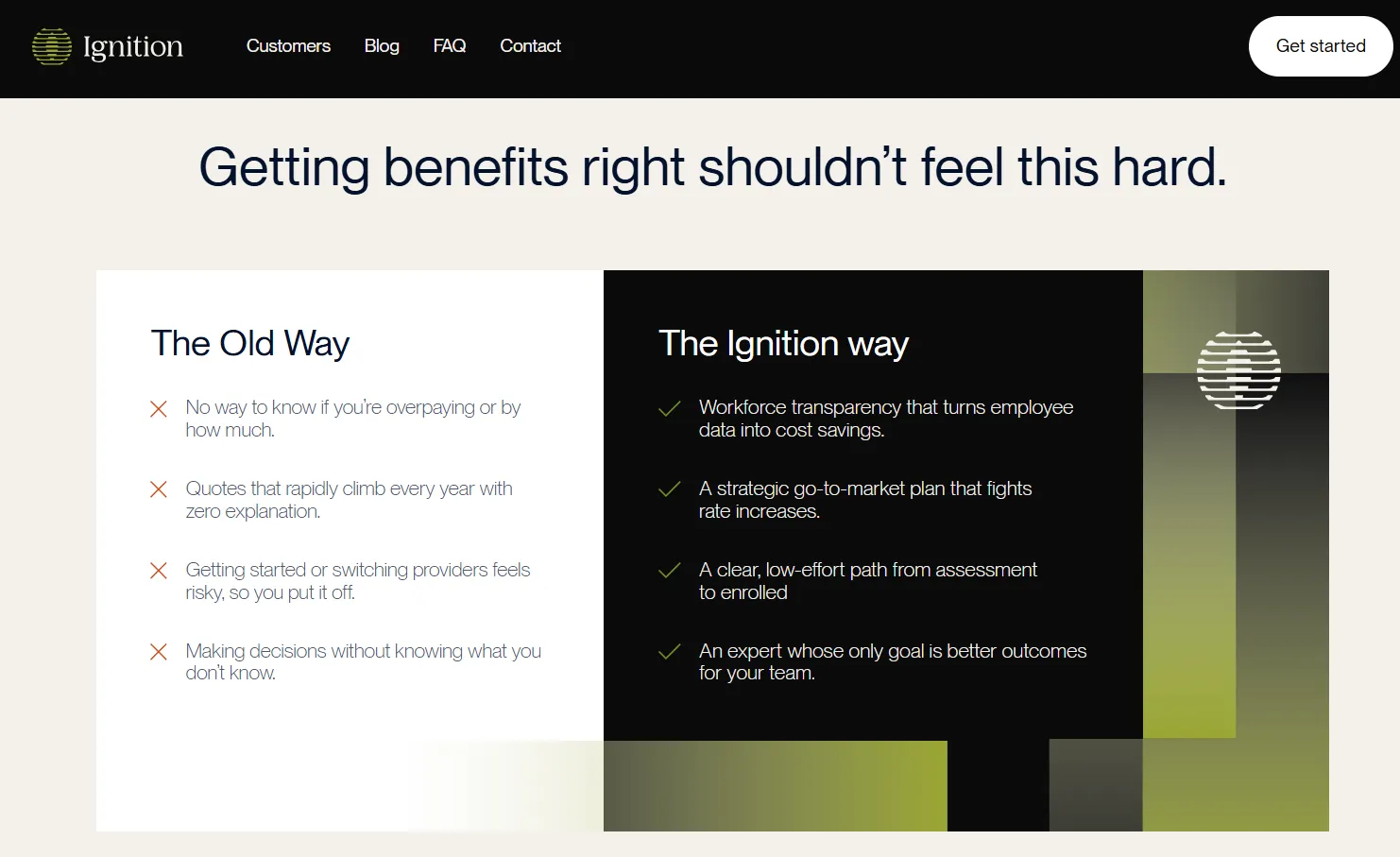
Deel and Gusto both handle employee benefits, but as an add-on to payroll. Deel offers plans through its US PEO pool, and Gusto operates a built-in brokerage with plans you enroll in from the dashboard.
What neither includes is advisory: an audit of every carrier against your workforce data, or the risk score the carrier already used to price your team.
Ignition Benefits covers that gap as an independent employee benefits brokerage that works alongside Deel or Gusto. Your platform keeps running payroll, and Ignition takes over the benefits decision.
What that gets you:
- A Full Market Audit at every renewal. Ignition Benefits checks every carrier, plan, and funding structure against your workforce data, with no preferred carriers steering the results
- Benefits Risk Score visibility. Pulls the score every carrier already has on your workforce and shows it to you before going to market
- Full compensation disclosure on day one. Shares every dollar of its commission upfront. The Consolidated Appropriations Act of 2021 made this your legal right, but most founders have never been told
- A recommendation in 14 to 21 days, compared to a legacy broker that takes 8 to 12 weeks
- PEO lift-out expertise. Ignition manages the exit when pooled pricing turns against a healthy team near 50 employees, with no coverage gaps for employees
Bundled benefits are convenient, and that convenience gets priced in. See where you're overpaying on benefits, and how much an independent broker like Ignition Benefits can save you.
Pricing
Most payroll services charge a monthly base fee of $20-$150 plus $2-$15/employee, per Business.com. Deel and Gusto price against that benchmark, but in completely different ways.
Deel
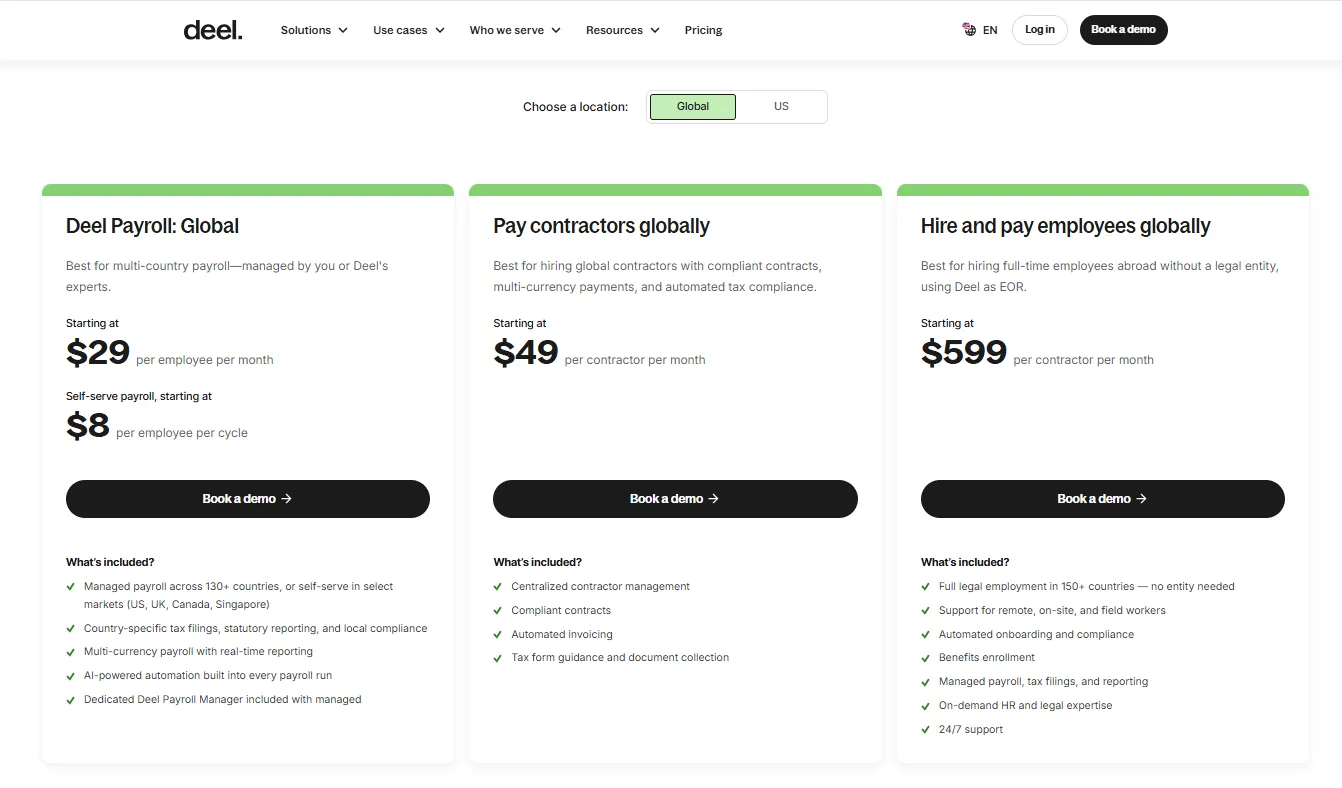
- Deel prices by location: a Global menu and a US menu. Blended teams often buy from both
- Global has three tiers: payroll from $29/employee/month, contractors at $49, and EOR at $599. US has two: self-service payroll from $29, or the PEO at $125/employee/month
- Add-ons stack on the base price. Benefits Management alone is another $10/employee/month
- On G2, Valentina G notes that "Deel's fees are less flexible compared to other platforms" for remote workers outside the US earning in USD or EUR.
- On the employee side, Ernestas Blaževič reports on Trustpilot that Deel holds payments beyond the timeframe allowed in his contract
📖 Read Next: Learn more about Deel pricing in our detailed breakdown, covering all plans, hidden costs, pros and cons, and more.
Gusto

- Gusto offers two payment methods: Pay My Team and Pay Myself
- Team plans run three tiers: Simple at $49/month + $6/person, Plus at $80/month + $12/person, and Premium at $180/month + $22/person. For solopreneurs who need payroll, Gusto’s Pay Myself plan is $49/month
- Gusto's Simple plan only supports single-state payroll. Hiring in a second state forces the upgrade to Plus
- Watch retroactive billing too: On Trustpilot, Odessa Jones warns Gusto charges the full month even if you cancel days in; another reviewer was billed for a departed employee's health services with no retroactive refund
- Cost sentiment favors value at scale. On Capterra, Suman A. rates it 5/5 but notes "the pricing is still a bit steep for smaller businesses." Fran D. left over cost: "it is very expensive for a small business."
For businesses feeling constrained by these costs, exploring other Gusto alternatives or reading our breakdown of Deel vs Justworks can help you compare more cost-effective platforms.
Verdict
Gusto is cheaper for US-only teams: 10 employees on Simple costs $109/month, while Deel's US payroll starts at $290 for the same headcount.
Payroll Processing
Both run payroll reliably at the median. The differences are geographic coverage and what happens when something goes wrong.
Deel
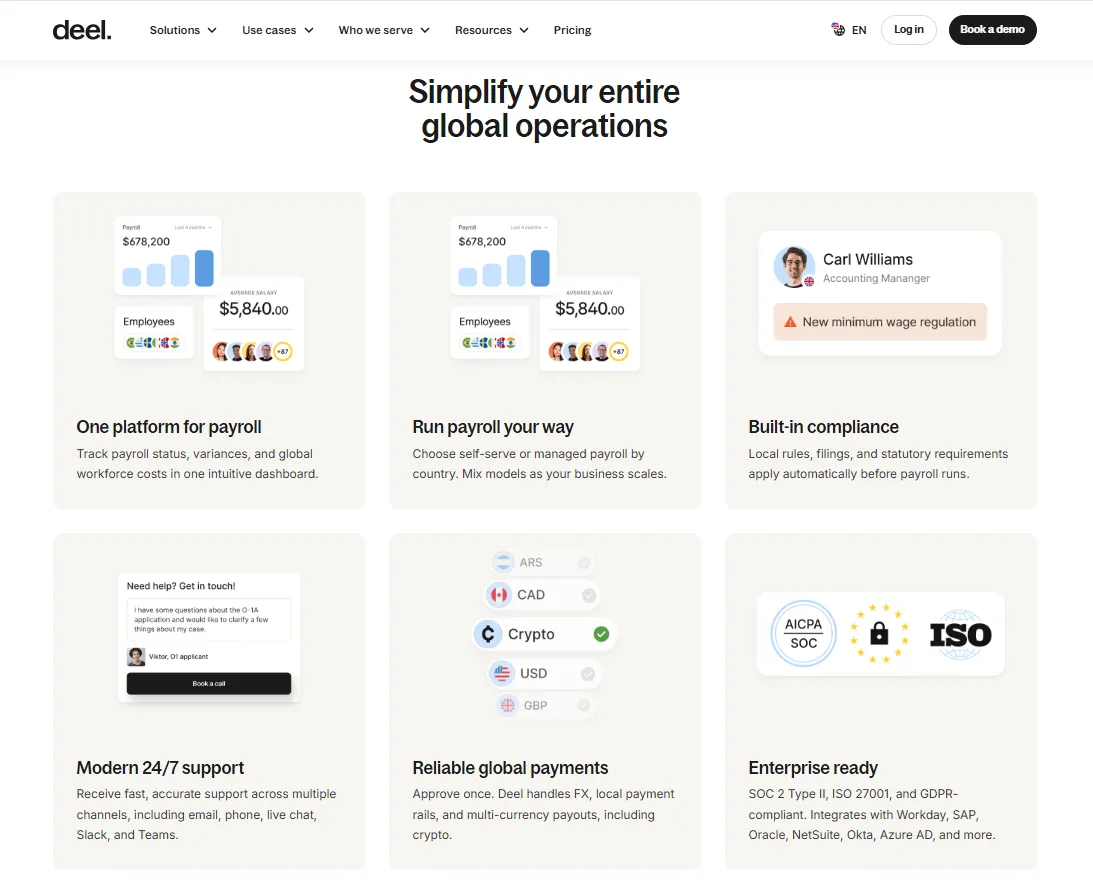
- Runs payroll in 130+ countries and pays in 120+ currencies, with country-specific tax filings handled, so you don't need a local provider per market
- Reviewers like Juan David A. cite ease of use and withdrawal options to bank, AstroPay, etc. Deel also supports multi-currency payouts, including Crypto
- But on the other hand, Jonny David L., who also finds Deel Payroll easy to use to stay compliant, says it gets costly at scale and reports that edge cases such as local tax exceptions, contract changes, or off-cycle payments take long to resolve
Gusto

- Full-service US payroll on every plan: unlimited runs, AutoPilot scheduling, off-cycle bonus runs, multiple pay rates and schedules (weekly through monthly), garnishments, tip credits, and holiday pay
- Taxes are handled end-to-end. Gusto calculates, files, and pays federal, state, and local payroll taxes automatically, generates W-2s and 1099s, reports new hires, and covers the penalty if its own filing error causes one
- Gusto Global also lets you pay international contractors and hire international employees worldwide through a partnership with Remote
- Direct deposit runs next-day, 2-day, or 4-day depending on the plan, and employees can access pay early through the free Gusto Wallet app. You can also edit a payroll after submitting it, which not every provider allows
- Reviewers back the payroll specifically: one Capterra user reports "payroll runs are quick and accurate," with onboarding saving hours weekly. Charity B. agrees on efficiency, but notes advanced features and integrations trail larger payroll services
Verdict
Both platforms support global payroll and payments. Gusto extends its US payroll platform through Gusto Global, while Deel was built specifically for managing multinational workforces, making it the stronger choice for businesses with complex international operations.
Employee Benefits
Benefits often rank second on payroll-adjacent spend, spanning health, retirement, insurance, and perks. Here's how each platform handles them.
Deel
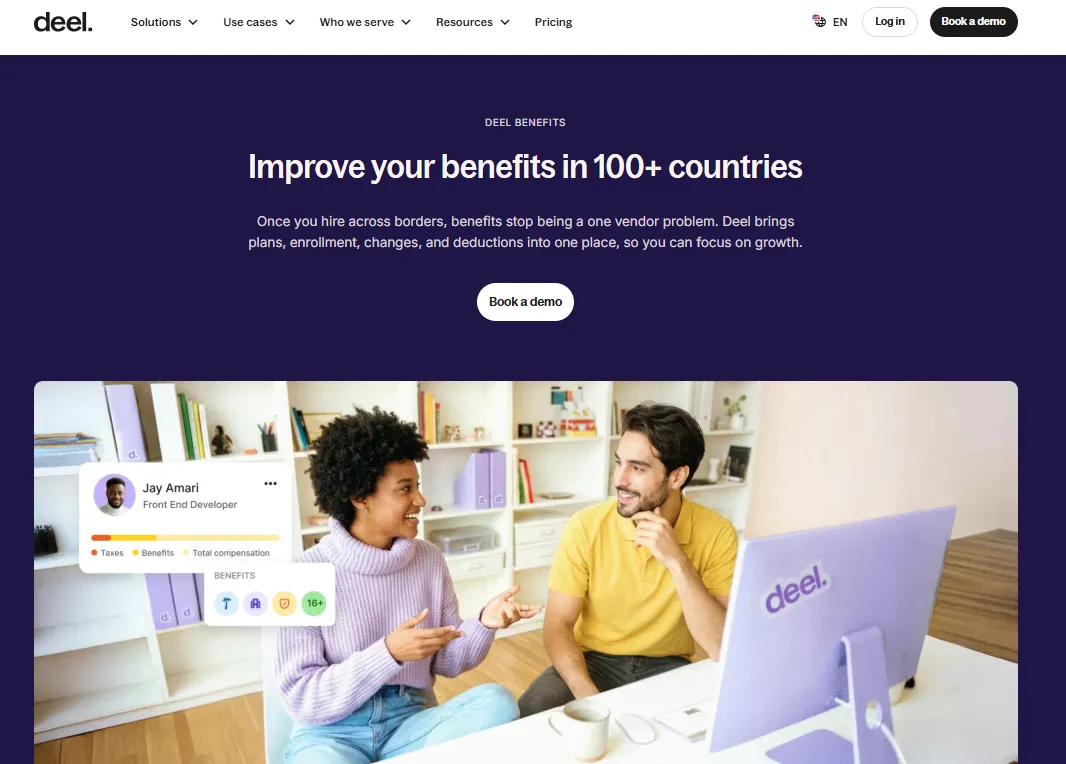
- Designs global benefits packages per country: healthcare, basic life, accidental death and dismemberment (AD&D) insurance, dental, childcare support, and transportation, flagged by what's statutory, common, or above-market in each location
- EOR employees get locally compliant statutory benefits built in: US teams get health coverage through the PEO plan or the Benefits Management add-on at $10/employee/month, with quotes through Deel's broker network
- Includes benchmarking advice on what to offer per market, useful when you're setting compensation in a country you've never hired in
- On Trustpilot, Alicia cites excellent benefits alongside globally centralized payroll, with "little to no complaints from employees."
Gusto
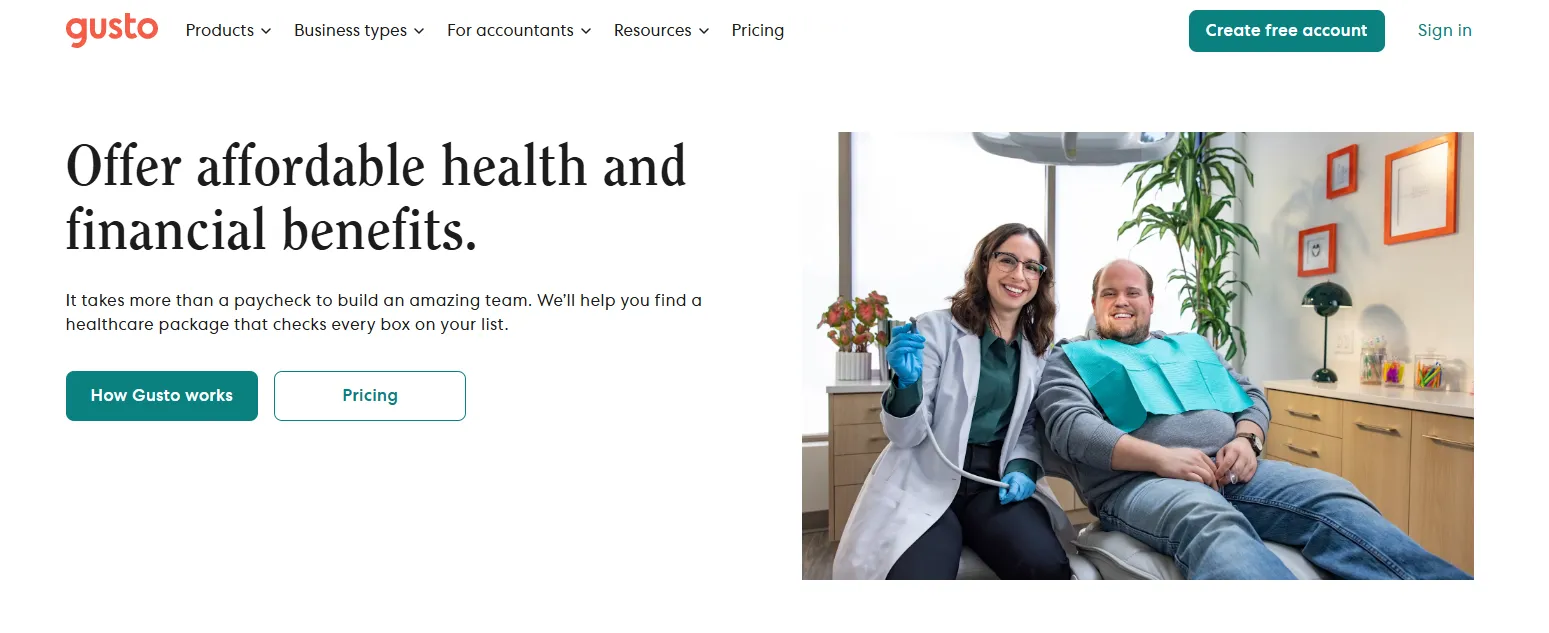
- Runs health insurance administration with 9,000+ plans across 30+ carriers and licensed advisors, with the option to add dental and vision synced to payroll
- Covers the financial stack too: 401(k) through Guideline, HSA and FSA accounts, workers' compensation, life and disability, and commuter benefits
- Lets you keep your existing broker, integrating your current plans into Gusto for $6/eligible employee/month, waived on Premium
- On G2, Lucas B. flags that Gusto's health brokerage only covers certain states, and integrating an outside broker's plans into Gusto's automated deductions "can feel very clunky."
Verdict
Pick Gusto if you want one vendor accountable for the whole benefits package, with advisors on call when employees have questions. Or, Deel if your hiring plan makes benefits a per-country decision, where what's statutory in one country differs from what's competitive in another.
💡Did You Know? Health costs are projected to rise 6.5% per employee in 2026, making annual renewals more important than ever. While Deel and Gusto help you manage employee benefits, they don't compare plans across the wider market or negotiate renewals on your behalf. Learn how to pick a benefits broker to see how employers reduce benefit costs without changing payroll.
HR and Team Management
HR tools are usually why teams stay on a platform after outgrowing its payroll. Here's what Deel and Gusto offer.
Deel

- Deel HR is a global HRIS built for distributed teams: people data, workflows, policies, time off, and approvals as one source of truth across countries
- Covers hiring through exit: an AI-powered ATS that sources and matches candidates, Workforce Planning for forecasting roles and costs, and compliant offboarding with anonymous whistleblower reporting
- Runs performance and compensation in the same system: reviews, goals, learning paths, and engagement via Engage, plus Compensation Management for pay decisions by role, performance, and location
- Afzal M. uses Deel as an internal HR portal and likes "having everything in one single place," though he finds the leave calendar view unintuitive and the help center geared toward contractors
Gusto

- Handles recruiting end to end: custom job posts syndicated to LinkedIn and Indeed, a centralized applicant tracking system, and custom offer letter templates
- Onboards with custom checklists: key documents, e-signatures, benefits enrollment, background checks through Checkr, and software provisioning in one flow
- Includes talent management: performance review templates, goal tracking, anonymous engagement surveys, an employee handbook builder, and learning courses.
- On G2, Whitney T. calls the platform easy for both admins and employees, with responsive support
Verdict
Gusto covers the HR a company needs before its first People hire: recruiting, onboarding, and talent basics that a founder can run alongside payroll.
Deel's stack assumes more scale, with workforce planning, compensation cycles, and structured offboarding, tools that matter once headcount planning becomes a real discipline.
Integrations
Payroll data feeds accounting, benefits, and HR tools daily, so how well a platform connects to your stack decides how much manual reconciliation you inherit.
Deel

- Syncs payroll to enterprise accounting: NetSuite is a featured integration, so multi-entity payroll runs post to your general ledger without manual journal entries, alongside QuickBooks and other accounting connectors
- Feeds payroll data into the wider stack: SAP SuccessFactors for HRIS, expense tools like Slash so reimbursements land in the right pay cycle, and equity via SliceGlobal
- Includes a Workflow Builder and open API for custom payroll-adjacent automations: onboarding, offboarding, and connecting your own HRIS, finance, or Enterprise Resource Planning (ERP) systems
- Sentiment splits on depth and cost: on G2, a mid-market user finds the integrations "genuinely useful," but the cost for instant ones is too high, while Ashish T. rates the integrations decent but limited
Gusto

- Syncs payroll journal entries to QuickBooks, Xero, FreshBooks, and Aplos automatically after each run, mapping wages, tax liabilities, and employer contributions to the right accounts
- Pulls hours straight into payroll from time-tracking partners like 7shifts and Homebase, so logged time flows into each run without re-keying
- Extends payroll data across a 150-app directory: hiring, expense management, point-of-sale (POS), tax preparation, and research and development (R&D) credit tools that read from payroll records
- Christopher N. values the workers' compensation, health insurance, and retirement connections as "a one-stop shop," and Tenaya K. says the integrations let her team replace manual payroll processes entirely
Verdict
Both platforms cover the integration that counts, payroll-to-accounting sync. You can pick Deel if you're on NetSuite or SAP, or need an API to build connections your tools don't ship with, and Gusto if your stack is QuickBooks or Xero plus SMB tools.
How to Choose the Right PEO or Payroll Setup for Your Business
Deel and Gusto bundle payroll, HR, and benefits into one subscription. Evaluate that bundle on four criteria before you sign, because the convenience is real, and so are the trade-offs.
Transparency in Renewal History and Risk Data
Most bundled and PEO setups place your employees in a shared risk pool, and the actuarial score carriers use to price your team never reaches you.
That's fine in year one, but by year three, you're absorbing unexplained increases with no data to challenge them, and "trust your broker" becomes the most expensive advice you've taken.
Independent brokerages work differently here. For instance, Ignition Benefits surfaces your Benefits Risk Score before going to market and shows exactly what's behind each renewal number.
📖 Read Next: PEO vs broker: how each model works, what each costs, and when growing teams unbundle.
Scalability Past the 50-Employee Inflection Point
PEOs are often cost-effective for companies with fewer than 25 employees. As headcount approaches 50 and beyond, per-employee fees increase with every new hire, making independent payroll and benefits a more economical option for many employers.
Evaluate any bundled setup against your 18-month headcount plan, and ask what the per-employee cost looks like at 60 heads.
Companies crossing that threshold often move to a PEO alternative and replace pool pricing with a plan built on their actual workforce, which is the transition Ignition Benefits specializes in.
Contract Flexibility and Freedom from Lock-In
Many PEO agreements and HRIS software tie benefits to payroll, HR software, and tax filings under one contract, so changing one piece means unwinding all of it.
The question to ask: if we switch payroll tools next year, what happens to our health coverage?
Unbundled benefits avoid this entirely. With Ignition Benefits, switching brokers takes a single Broker of Record letter, and your payroll platform, whether Deel, Gusto, or anything else, stays untouched.
Health Benefits Quality, and Carrier Access
Gusto's brokerage spans 30+ carriers with licensed advisors, and Deel's PEO opens Fortune 500-level plans that a small business can't reach alone. Both give you real access. What varies is whether the options come from a full market check or a preferred network.
Three questions separate the two:
- How many carriers were quoted at the last renewal? Two or three from the same network means no market check.
- Which funding structures were considered? Fully insured, level-funded, and self-insured, and captive should all be on the table; most bundled providers default to fully insured only.
- Can you see the risk data behind the quote? If not, you can't tell whether the price fits your team or the pool.
Ignition Benefits answers all three with a Full Market Audit: every carrier, every funding structure, at every renewal, no preferred network steering results.
📖 Read Next: Not sure which health benefits funding structure fits your team? See level-funded vs self-funded and self-funded vs fully funded for how each works, what they cost, and who they fit.
Ignition Benefits: The Alternative That Works Alongside Deel and Gusto

Ignition Benefits is an independent employee benefits brokerage built for the business leader, not the carrier.
It doesn't run payroll and doesn't replace Deel or Gusto, but takes over one decision both platforms make by default: what your team's health coverage should cost.
Because benefits are often the second-largest people expense after salaries, reviewing how that price is set can have a bigger financial impact than switching payroll providers.
Ignition Benefits Key Features
These three features put data in your hands that the standard broker model was built to withhold.
Benefits Risk Score
Every carrier scores your workforce on location, age, and gender before pricing your renewal. They keep this score on file, but rarely show it to customers.
Ignition pulls it before going to market, so you know how carriers view your team's risk before getting a quote.
A young, healthy team typically receives a low risk score. If your team scores low but you're still paying high premiums, it's a strong signal you're overpaying for employee benefits. With your Benefits Risk Score in hand, you have objective data to challenge your renewal and negotiate a better quote.
Full Market Audit
At every renewal, Ignition checks every available carrier, plan, and funding structure (fully insured, level-funded, captive, self-insured) against your actual workforce data.
The output is a Benefits Analysis Report in plain language: what you pay today, what the market offers, and a clear recommendation. The delivery takes 14 to 21 days, while legacy brokers take 8 to 12 weeks for comparable depth.
After an initial 15-minute discovery call to understand your workforce and goals, Ignition gathers quotes, evaluates carriers, and compares funding models on your behalf. Once the review is complete, a second 15-minute meeting walks you through the findings and recommendations.
PEO Lift-Out and Renewal Rebuilds
When pooled pricing turns against a healthy team, Ignition Benefits manages the exit: timing, carrier submissions, and re-enrollment, with no coverage gaps. The reach extends further than most brokers go.
Ignition Benefits Pricing
Ignition Benefits does not charge employers. Instead, it gets compensated by the insurance carrier you ultimately choose.
Where Ignition Benefits Shines
- Benchmarked visibility: Ignition shows you exactly what you're overpaying, measured against companies your size, so you're not guessing whether a quote is fair
- Fights every rate increase: Ignition re-runs the market every year, so your pricing doesn't decay into autopilot renewals
- No-risk switching: you get zero coverage gaps, no long-term contracts, and an expert who works for you, not the carrier
Where Ignition Benefits Falls Short
- Not a payroll or HR platform: you still need Deel, Gusto, or an equivalent for payroll, HRIS, and compliance
Ignition Benefits Customer Reviews
From AWM Capital, a 44-employee firm running payroll, HRIS, and 401(k) through Gusto:
"We assumed Gusto was getting us a fair deal on benefits. Two short calls with Ignition saved us six figures and got us better coverage than we'd ever had." Robert McConchie, CFO & Co-Founder
From Light Labs, a laboratory technology company that kept Gusto for payroll and HR after Ignition reviewed its benefits renewal:
I didn't realize how much money we were leaving on the table until Ignition ran the numbers. We saved $113,000 in year one, on a 25-person team. For a company our size, that makes a big difference." Nick Mares, CEO
Who Ignition Benefits Is Best For
- Founders and teams of up to 200 employees, who own the benefits decision and have never had the plan independently audited
- Teams on Deel, Gusto, or a PEO facing an unexplained renewal increase and no claims data to challenge it
- First HR hires who inherited an unexamined setup and need a defensible recommendation before renewal, not next quarter
Want to learn more before your next benefits decision? These FAQs cover what it costs to work with Ignition Benefits, how much you can save, and how to get started with a benefits review.
Deel, Gusto, or Neither?
Deel or Gusto handles your payroll, HR, and employee benefits: choose Deel for international teams and Gusto for US-focused employers.
If your biggest concern is the cost of employee benefits, neither platform is designed to benchmark your renewal against the wider insurance market. Ignition Benefits reviews your existing plan, compares every available option, and helps you understand whether you're paying more than you need to.
Get a full benefits comparison from Ignition Benefits and find out whether you're overpaying before your next renewal.
FAQs
Does Gusto offer EOR services like Deel?
Yes, through Gusto Global, which is powered by Remote and covers a smaller set of countries than Deel's 150+.
Do I have to use Deel's or Gusto's benefits to use their payroll?
No. Both platforms let you keep an outside broker. Gusto charges $6/eligible employee/month for broker integration, waived on Premium, and Deel's PEO lets you keep existing plans
Can I switch benefits brokers mid-year without changing my payroll platform?
Yes. A Broker of Record letter moves the benefits relationship without touching payroll, and coverage continues uninterrupted. An independent benefits brokerage like Ignition Benefits handles the whole transition.



_%20Which%20One%20Wins%20for%20Your%20Team_.webp)

![How to Reduce Small Business Health Insurance Costs [2026]](https://cdn.prod.website-files.com/69f22330e53a32bb7629af15/6aa04b2f5dbdf3dc6b28b351_How%20to%20Reduce%20Small%20Business%20Health%20Insurance%20Costs%20%5B2026%5D%20(1).webp)
.webp)




.webp)



.webp)
.webp)









.webp)





.webp)








.webp)




.png)

