.svg)

.svg)


.webp)

- Ignition Benefits is the strongest TriNet alternative if rising insurance premiums and lack of transparency are your main frustrations. Ignition shows you what's driving your premiums, shops the full market on your behalf, and secures the same/better plan at a lower rate.
- Justworks is the best PEO swap for small teams that want quality health coverage through major carriers, transparent pricing, and a single platform for payroll, HR, and compliance.
- Gusto suits small and medium-sized companies that want a flexible, month-to-month HR and payroll platform without co-employment or long-term contracts.
- ADP TotalSource is the right fit for mid-sized companies that want large-group benefit rates and a dedicated HR Business Partner.
- CGO works best for companies that want the administrative convenience of a PEO without the co-employment structure.
For nearly four decades, TriNet has been helping small and medium-sized businesses manage payroll, benefits, and compliance. This kind of track record carries real weight. But that doesn't mean TriNet is the right fit for every company.
A quick look at recent G2 reviews show similar friction points: a steep learning curve, unexplained increases in health insurance premiums, customer support that's hard to reach, and an unintuitive user interface.
If you’re a current user considering a switch, this article breaks down the best TriNet alternatives, including their features, pros and cons, and pricing.
Top 5 TriNet Alternatives: At a Glance
1. Ignition Benefits: Best for Lower-Cost Benefits Without PEO Lock-In
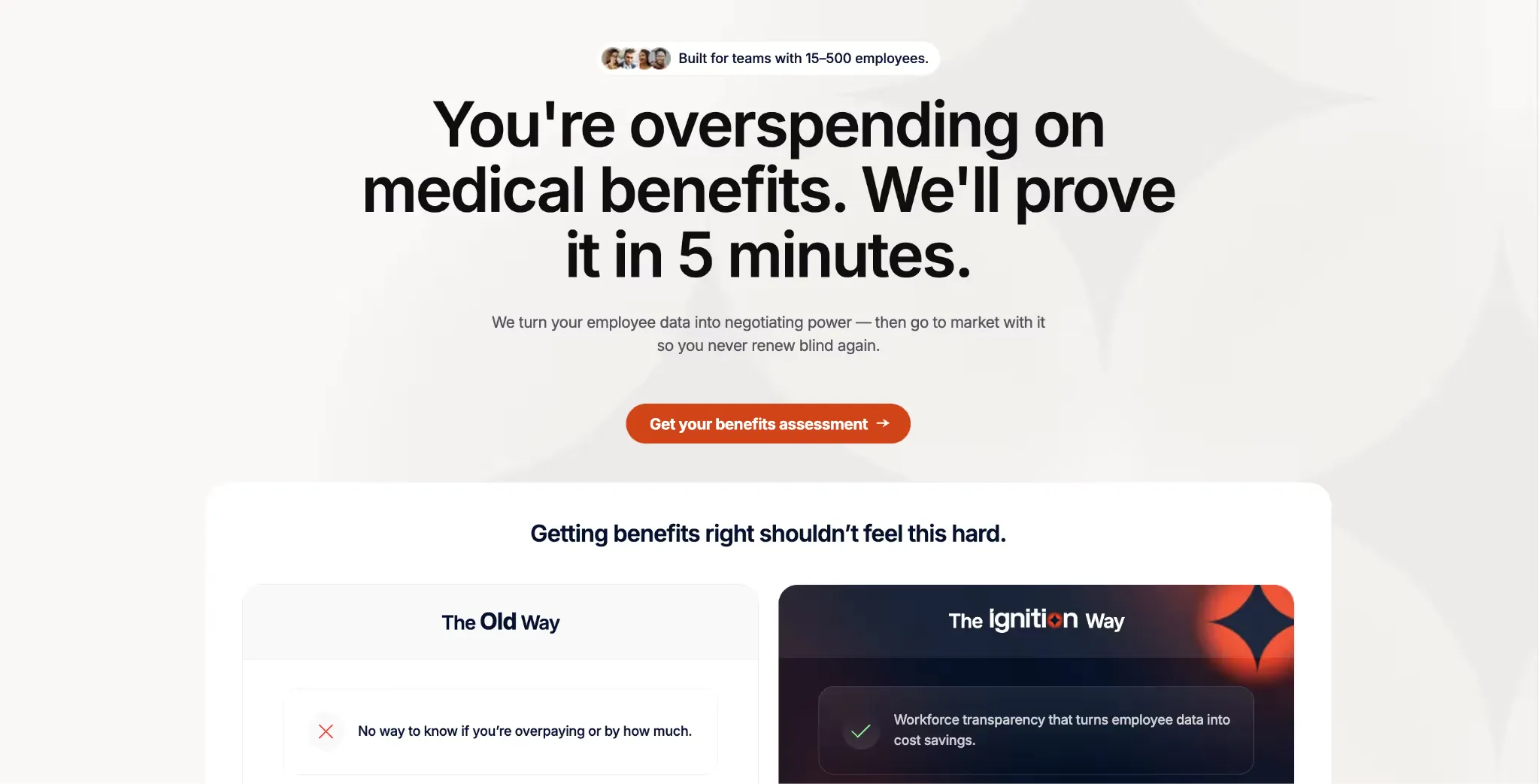
“We would like more transparency regarding the reasons behind this year's premium increases.”
That's a real G2 review from a TriNet customer, and it points to a common frustration across the PEO market. This is the problem Ignition Benefits was built to solve.
Ignition Benefits is an employee benefits brokerage that takes the guesswork out of health coverage. It analyzes your current plan, shops the entire carrier market, and negotiates a lower cost for the same/better coverage on your behalf.
Ignition Benefits Key Features
Benefits Risk Score Visibility
Insurance carriers calculate a risk score for your workforce before setting your renewal price, based on factors like age, gender, location, and claims history. They use it to price your plan, but most founders never see it.
Ignition pulls your Benefits Risk Score before going to market. If your team is young and healthy, which is true for most tech startups, that score is typically low. When the score is low but your premiums are high, you're overpaying. Ignition uses that gap as leverage to negotiate a better deal across the full carrier market.
Renewal Negotiation
Most brokers show two or three renewal options from the same carrier and label it a market review. Ignition runs a full market audit at every renewal, reviewing all available carriers against your actual workforce data instead of a pooled average.
The audit also covers funding structure. Should you stay on a fully insured plan, move to level-funded, or explore self-insurance?
Full Fee Transparency
Under the Consolidated Appropriations Act of 2021, brokers are required to disclose their compensation when asked. Most founders have never heard of this right, and most brokers don't bring it up.
Ignition Benefits shows all costs upfront, including its own fee, with no carrier incentives or hidden charges.
Ignition Benefits Pricing
Ignition is free for the employer. Like all brokers, it earns through carrier commissions, which are fully disclosed.
Where Ignition Benefits Shines
- Savings grounded in actual risk profiles: Ignition uses your Benefits Risk Score to negotiate across the full carrier market. For low-risk workforces, the difference between what you're paying and what you should be paying is often major.
- Fast turnaround time: Ignition takes just 14-21 days to get the Benefits Analysis Report, which normally takes brokers 8-12 weeks. This gives founders more time to act before renewal deadlines.
Where Ignition Benefits Falls Short
- Benefits-only scope: Ignition focuses primarily on benefits as it is one of the largest cost areas for most companies No other tools on this list focus on benefits with the same level of detail as Ignition.
If you need HR or payroll, Ignition can work seamlessly with other platforms - all you need is a single Broker of Record letter to appoint Ignition as your benefits agent.
Who Ignition Benefits Is Best For
- Founder or CEO at a 10 to 500 person company who owns benefits decisions and is concerned about rising premiums and overpaying on health insurance.
2. Justworks: Best for Small Teams Wanting Clear Health Benefits
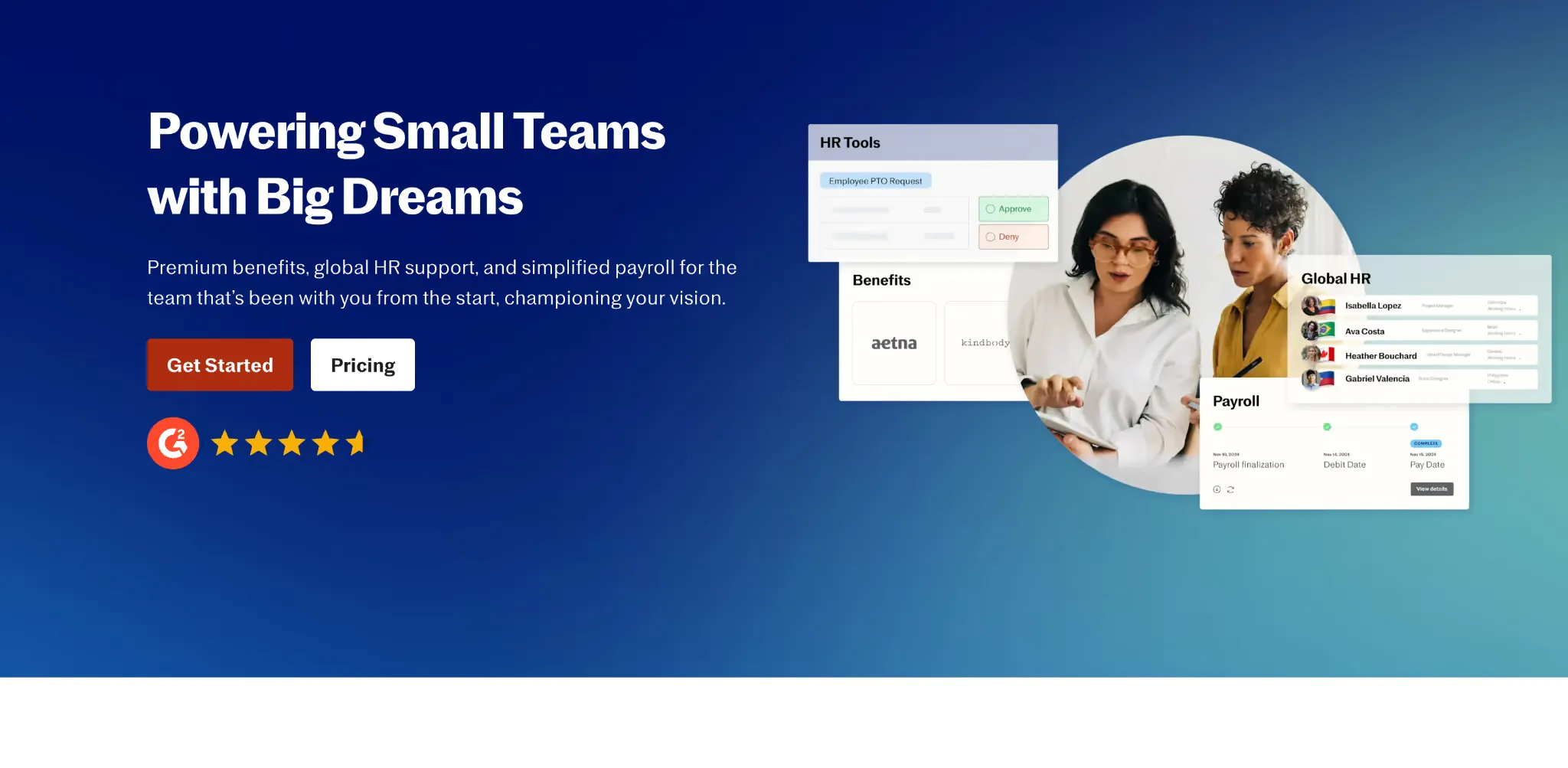
Justworks is a certified PEO built for small and growing businesses. It bundles payroll, compliance, HR, and health benefits into one platform with pricing published upfront. Health insurance runs through Aetna, UnitedHealthcare, and Kaiser, with an open-market option for companies that want more flexibility.
Key Features
- Large-group health access: Medical, dental, and vision at rates typically available to larger companies.
- Integrated HR platform: Payroll, compliance, time tracking, onboarding, and benefits in one self-serve portal with 24/7 support.
- Built-in compliance coverage: Workers' compensation and EPLI are bundled into every plan, which cover claims of wrongful termination, discrimination, and harassment. Payroll tax filings, new hire reporting, and W-2/1099 submissions are handled automatically alongside it.
Pricing
Where Justworks Shines
- Transparent pricing: One of the very few PEOs that publishes rates publicly.
- Smooth onboarding: The platform is intuitive and customer support is responsive, helping teams get up to speed without much friction.
Where Justworks Falls Short
- No market benchmarking: Justworks manages renewals at the pool level. You don't get visibility into your workforce's individual risk score or a comparison against the full carrier market.
- Renewal increases with little context: Justworks publishes its admin pricing upfront, but health insurance premiums still renew through the carrier pool. When those increase, there's no detailed breakdown of what drove the change.
Who Justworks Is Best For
- Small companies looking for access to major carrier health plans and a single platform to manage payroll, benefits, HR, and compliance.
3. Gusto: Best for SMBs Wanting a Flexible HR and Payroll Platform
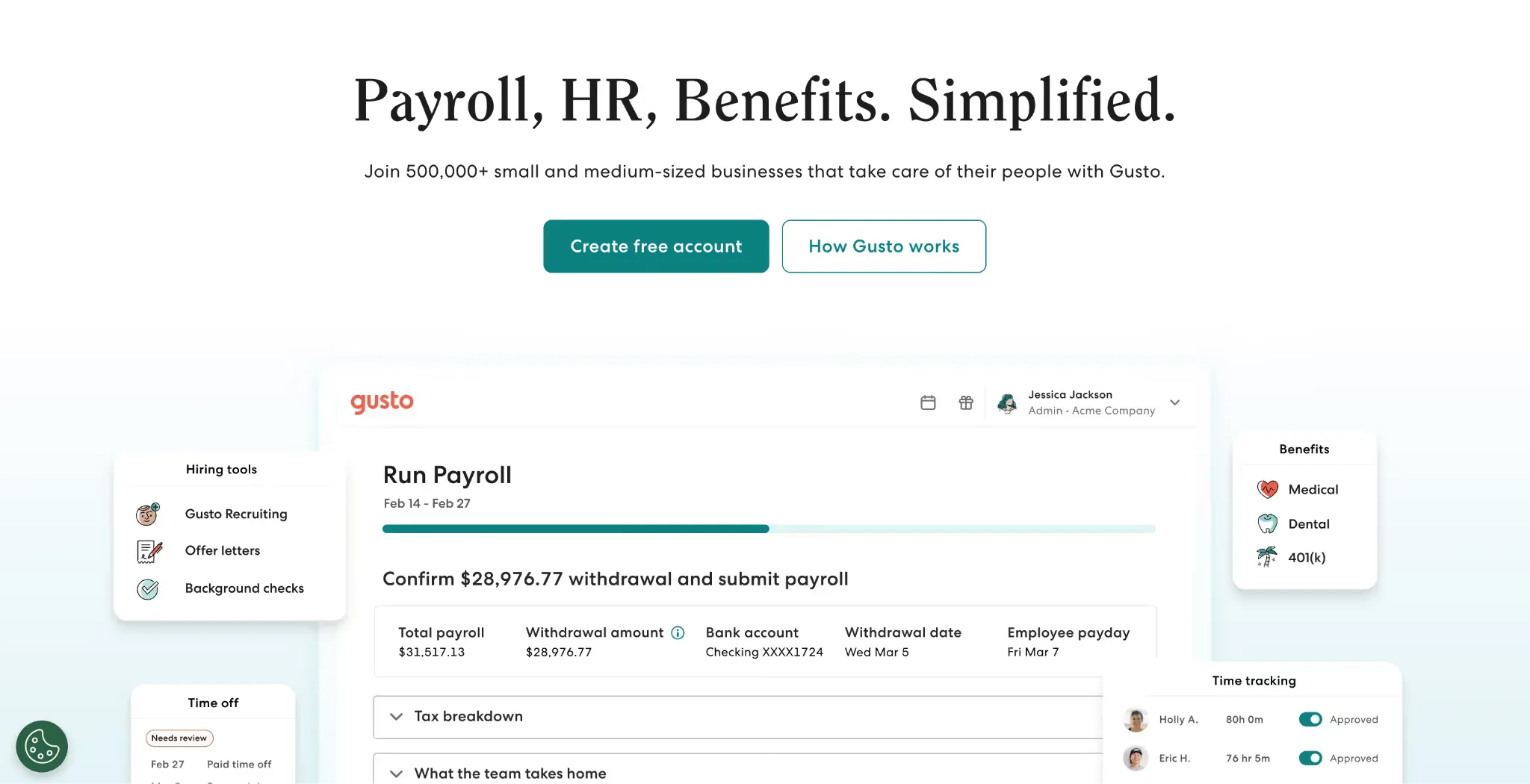
Gusto is a payroll, HR, and benefits platform for small and medium-sized businesses. It combines payroll, compliance, people management, and benefits in one system, without a co-employment model.
For companies leaving TriNet that want to simplify their HR stack without signing up for another co-employment arrangement, Gusto handles the day-to-day without locking you in.
If you are exploring this route, you can also view our comparison of Gusto alternatives to see how other HR platforms stack up.
Key Features
- Benefits breadth: Medical, dental, vision, HSA, FSA, 401(k), commuter benefits, and life insurance all in one platform.
- Broker flexibility: Use Gusto's licensed advisors, work with your own broker, or import an existing plan.
- Payroll-first design: Deductions, tax filings, and benefits enrollment sync automatically through onboarding.
- Global team management: Hire, pay, and manage international contractors and full-time employees from the same platform as your US team - no local entity needed.
Pricing
Where Gusto Shines
- Ease of use: The interface is easy to navigate, even for teams without a dedicated HR person. As one G2 reviewer puts it, “The layout is clean and actually feels like a modern app you want to use.”
- No long-term lock-in: Gusto runs month-to-month with no annual contracts. For companies still figuring out their HR setup, this flexibility means you can upgrade, downgrade, or add features as your needs change
Where Gusto Falls Short
- No access to group buying power: Gusto quotes each business individually, so your premium is set by the carrier regardless of your team's risk profile. Young, healthy workforces often end up overpaying as a result.
- Limited state coverage: Health benefits are currently available in 37 states, excluding Alabama, Alaska, Montana, Louisiana, and more. If your team is spread across multiple states, it's worth checking out a different platform for benefits coverage.
Who Gusto Is Best For
- Small and medium-sized companies that want straightforward HR, payroll, and compliance features without a PEO or long-contract lock-in.
4. ADP TotalSource: Best for Companies That Need Large-Group Benefits
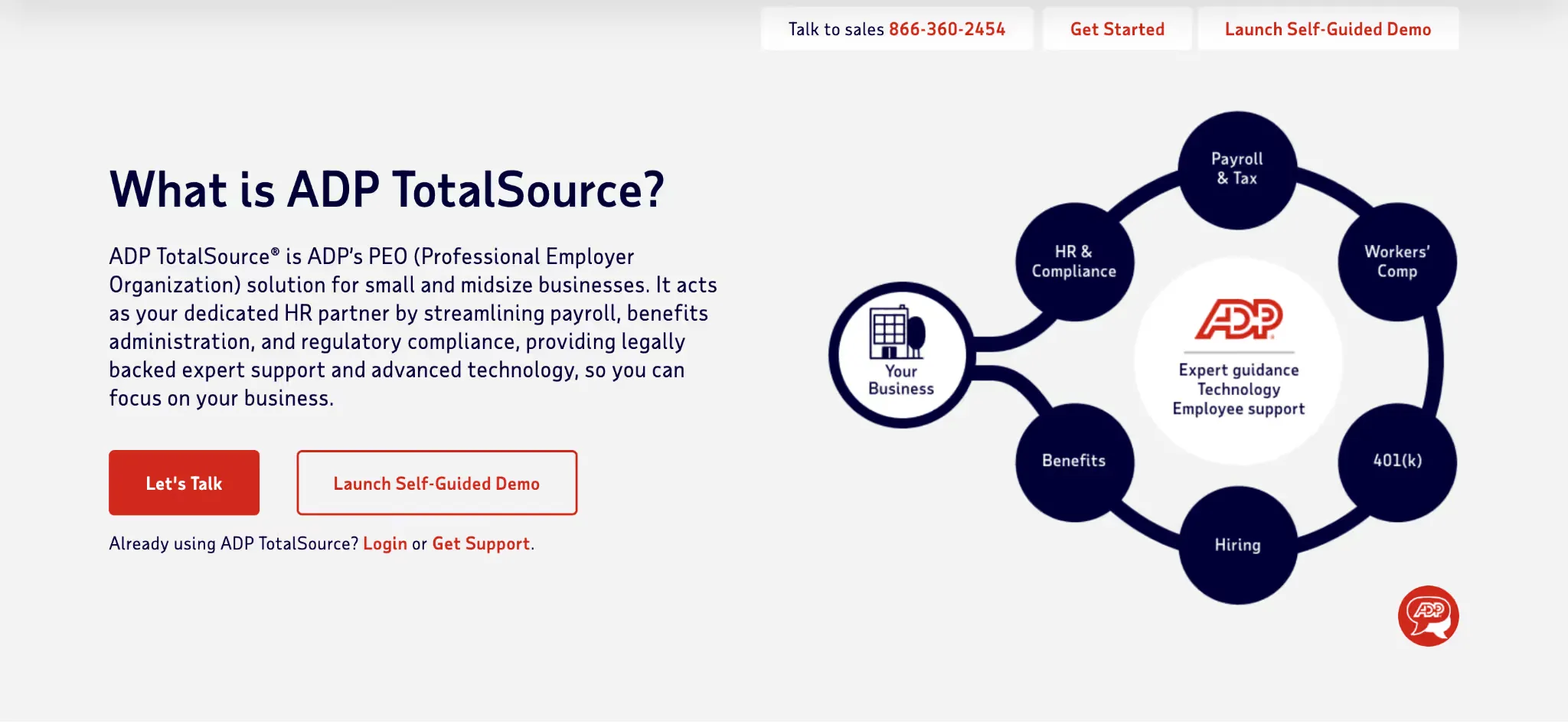
ADP TotalSource is one of the largest PEOs in the US, which is also certified by the IRS. It bundles payroll, benefits, workers’ compensation, and compliance into a co-employment setup.
Every client also gets a dedicated HR Business Partner, a certified HR professional who handles day-to-day questions, compliance guidance, and strategic check-ins as you scale.
Key Features
- Large-group benefit rates: Access to Aetna, Anthem, Kaiser, and UnitedHealthcare at rates reflecting ADP's scale.
- ADP Assist: AI-powered tooling for proactive HR notifications and data-driven workforce insights.
- Payroll and tax support: ADP handles payroll across all 50 states, covering wages, bonuses, deductions, and tax filings - with dedicated specialist support throughout.
Pricing
Pricing is custom and is available on request.
Where ADP TotalSource Shines
- Scale and buying power: With over 722,000 worksite employees, mid-sized companies get access to large-group benefit rates they typically couldn’t get on their own.
- Full-service infrastructure: Payroll, HR, compliance, benefits, and workers' compensation all handled by one platform with a dedicated contact person.
Where ADP TotalSource Falls Short
- Opaque pricing: ADP doesn't publish its pricing, which can make it difficult to compare it with other TriNet alternatives.
- No risk score visibility: Renewals are based on pooled data, not your team’s specific risk profile. If your workforce is healthier than average, that advantage doesn’t show up in your pricing.
Who ADP TotalSource Is Best For
- Mid-sized companies that have outgrown small-group benefit rates but aren't large enough to negotiate directly with carriers on their own.
5. CGO: Best for Companies That Want HR Outsourcing Without Co-Employment
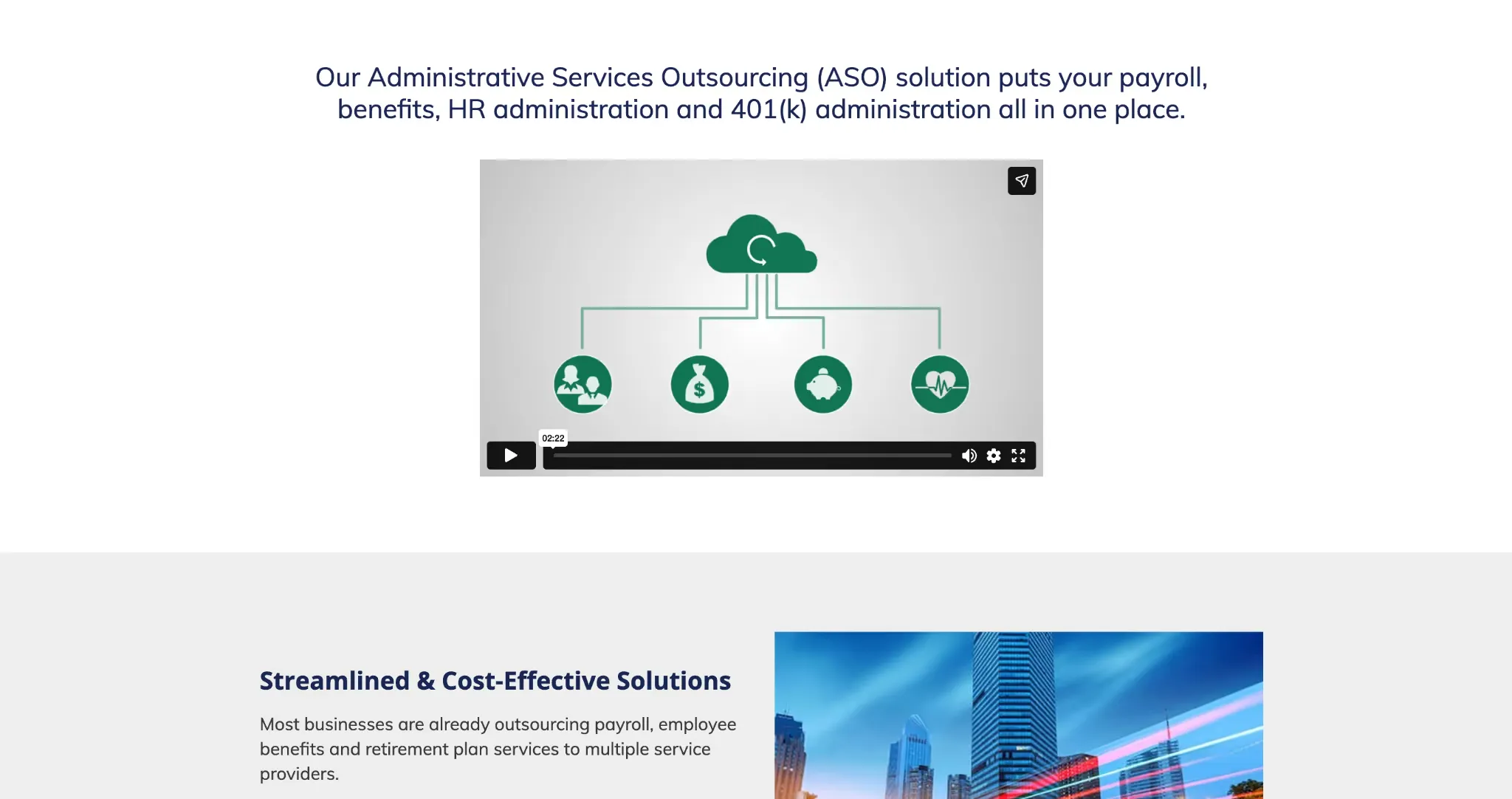
CGO is an independent insurance broker and HR outsourcing firm founded in 1997, serving companies across 46 states. Its standout offering for companies looking to leave TriNet is its Administrative Services Outsourcing (ASO) model. It brings payroll, benefits, HR administration, and 401(k) together in one system, without a co-employment structure.
Key Features
- ASO model: You retain full employer-of-record status. CGO handles payroll, benefits administration, HR compliance, and 401(k) all in one integrated platform.
- Full employee lifecycle management: CGO covers HR administration from onboarding all the way to retirement. This also includes compliance and leave management at every stage.
- Broad carrier relationships: CGO provides access to major carriers like BCBS, UHC, Humana, Cigna, Aetna, Guardian, Principal, Lincoln, and MetLife, along with alternative funding options.
Pricing
Contact CGO’s sales team for a personalized quote.
Where CGO Shines
- PEO alternative without losing control: The ASO model gives you the administrative convenience of a PEO while keeping you as the employer of record - no co-employment complexity.
- Accountability built into the relationship: CGO works with you at the start of each year to define clear service initiatives and tracks progress against them throughout.
Where CGO Falls Short
- Requires some internal HR infrastructure: The ASO model works best when someone internally can own the relationship. Early-stage startups without HR support may struggle with CGO’s ASO model.
Who CGO Is Best For
- Mid-sized businesses that want integrated HR admin, payroll, benefits, and compliance in one setup, while retaining full ownership and control throughout.
Reasons to Consider a TriNet Alternative
TriNet is a solid platform with genuine strengths, like industry-specific HR expertise and access to major carriers. That said, it is not always the right long-term fit.
Here are a few reasons why TriNet users start looking elsewhere:
No Transparency Behind Rising Insurance Premiums
This is how TriNet users describe the renewal experience:
"My least favorite is benefits renewal time. I miss sitting down with someone to go over changes/increases and alternatives" - G2 user.
"The account rep only reaches out once per year at the time of renewal to try and increase what you pay" - G2 user.
"One challenge was a year when benefit renewal costs came in higher than expected" - G2 user.
With TriNet, premiums renew once a year with little explanation of what changed and why.
What most companies do not know is that their carrier already assigns a risk score to their workforce that directly determines what they pay. That score is not shared, which leaves no real data to push back on.
Ignition Benefits brings full transparency to this process. It surfaces that risk score, assesses whether you are overpaying, and uses it to negotiate a better rate on your benefits coverage.
The Costs Are Higher Than Expected
TriNet is an expensive platform. The admin fee per employee is high, and several reviewers flag extra charges that weren't clearly shared at signup. Add rising health insurance premiums on top, and the total cost quickly becomes difficult to justify, especially for early-stage companies.
If you are unsure whether your benefits spend is justified, Ignition Benefits offers a free assessment to help you understand if you are overpaying on health insurance. Use it to validate your decision.
Your Team Has Grown Past the PEO Model
TriNet pools your workforce with hundreds of other companies to negotiate health rates. Early on, that works in your favor. You get access to coverage you couldn't negotiate alone. But as your team grows, the pooled model starts to cost you.
At 50+ employees, your workforce has a defined risk profile that's specific enough to stand on its own in the market. Inside a shared pool, that specificity gets averaged out and you pay for risk that isn't yours.
Ignition Benefits goes to market with your team's actual risk profile (not a pool average), so the rate you get reflects what your workforce actually costs to insure.
Get Better Benefits Without the PEO Overhead
If rising benefits costs and unclear premium increases are what brought you here, another PEO won’t solve the problem. Pooled pricing and limited renewal transparency are part of the model, not specific to TriNet.
Ignition Benefits takes a different starting point. It uses the risk data your carrier already has on your team to shop the full market, negotiate on your behalf, and secure the same or better coverage at a lower cost.
If you are close to renewal or preparing for an upcoming board discussion, it’s time to take action now.
FAQs
What Is a PEO and How Does It Work?
A PEO enters into a co-employment relationship with your company, becoming the employer of record for tax and benefits purposes. It handles payroll, benefits, workers' compensation, and compliance while you keep day-to-day operational control.
How Much Does TriNet Cost?
TriNet doesn't publish its pricing. Plans are quoted per employee per month and customized based on your industry, headcount, and location.
Can I Switch From TriNet Without Disrupting My Employees’ Coverage?
Yes. Switching to Ignition Benefits, for instance, does not require employees to change plans or re-enroll. A simple Broker of Record letter is enough to appoint Ignition as your broker with the carriers. Employees keep their existing coverage with no changes on their end.



_%20Which%20One%20Wins%20for%20Your%20Team_.webp)

![How to Reduce Small Business Health Insurance Costs [2026]](https://cdn.prod.website-files.com/69f22330e53a32bb7629af15/6aa04b2f5dbdf3dc6b28b351_How%20to%20Reduce%20Small%20Business%20Health%20Insurance%20Costs%20%5B2026%5D%20(1).webp)
.webp)




.webp)



.webp)

.webp)









.webp)





.webp)







.webp)




.png)

